Many educators are accustom to the "old story" of education that had a traditional approach to teaching which was based upon the transmission of knowledge from teacher to student. There was limited social interaction, standardized testing, and it was grounded in the principles that sought to make factory work more efficient. Today's "new story" does not seek to dismiss the old but rather identify and build upon its positive aspects to create a new approach that works for the 21st century learner.
Old Story
|
New Story
|
-grounded in the purpose of efficient factory work
-teacher is expert
-mind is viewed as a blank slate
-teacher transmits knowledge into empty vessel
-curriculum was delivered in one method for all students
|
-holistic curriculum teaches the whole child (mind, body & spirit)
-constructivist teaching
-project based leaning
-metacognition
-curriculum can be modified to fit needs of the learner
|
(Drake, Reid, & Kolohon, 2014)
Retrieved from: https://www.youtube.com/watch?v=Ax5cNlutAys
Throughout many placements that I have attended in my four years at Brock University I have come to see that many educators today are still stuck in the traditionalist way of teaching. I understand that it is difficult to change your ideas of education if that is how you were taught as a students, but you are not the student anymore. We as educators must be able to teach to the needs and desire of the students in the 21st century. Michael Fullan (2013), believes there are three key features to creating a new story:
Technology
 |
| http://s3.amazonaws.com/libapps/accounts/18234/images/hires.jpg |
Many front runner educators use technology to enhance their student's learning and allow for a deeper assessment. Since the internet and social media have such a strong presence in the lives of our students today it is only logical to somehow find a way to incorporate into our curriculum. Media studies is currently a strand in the Ontario English Curriculum that explores the impact and influence of mass media and pop culture. It is therefore important to use the common equipment that students use to access this sort of information outside of the classroom and bring it into the learning environment. But how are we to monitor the students who may abuse their use of technology within the classroom? And how can I be an effective teacher if my students are more technologically inclined than I am?
New Pedagogy
The new pedagogy revolves around 21st century skills that include four main characteristics;
- Irresistibly engaging
- Elegantly efficient
- Technologically ubiquitous
- Steeped in real-world problems
This form of deep learning in the classroom requires students to learn 21st century skills such as communication, creativity and collaborative teamwork. According to Johnson et al., challenge-based learning (CBL) is a new teaching model that incorporates problem based learning, project based learning, and contextual teaching. As a future teacher I question how I will be able to develop deep thinking learners and if all these teaching models are appropriate in my physical education setting.
Teacher as Activator
 |
| Retrieved from: https://pbs.twimg.com/profile_images/1416095979/ Screen_shot_2011-06-27_at_3.01.27_PM_400x400.png |
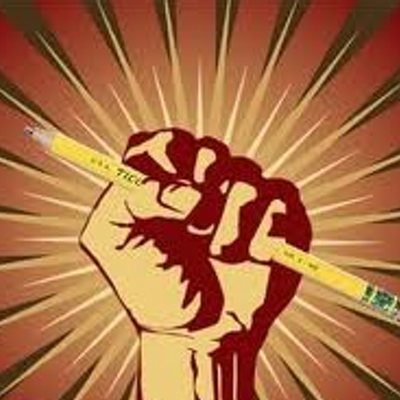
As future educators it is important to share our new story of education and to be the change!
References
Drake, S., Kolohon. W., & Reid, J. (2014). Interweaving curriculum and classroom assessment: Engaging in the 21st Century Learner. Don Mills, ON: Oxford University Press.
Fullan, M. (2013). Stratosphere. Toronto, ON: Pearson.
Johnson, L., Smith, R., Smyth, J., & Varon, R. (2009). Challenged-based learning: An approach for our time. Austin, TX: The New Media Consorium.
Ontario Ministry of Education. (2007). The Ontario curriculum grades 9&10: English. Retrieved from https://www.edu.gov.on.ca/eng/curriculum/secondary/english910currb.pdf

Vanessa,
ReplyDeleteI really enjoyed your blog this week! I can see that your blogs have gotten better since your first week and have improved a lot! The layout of your blog is visually appealing, and the fact that you have a table, embedded videos, sub headings and pictures in appropriate spots show how organized you have become since your first blog. Great job Vanessa! My only concern is what challenges do educators face in implementing this new type of education? In addition how would this approach specifically enhance student's learning? If you were to go a little more in depth in your future blogs, your blog would be phenomenal!
Keep up the good work!
Vanessa,
ReplyDeleteNice opening quote! It served as a good introductory point into your discussion of the necessity for educational change. You did a great job making your blog both aesthetically pleasing and incredibly easy to follow this week, and the layout of your text on the page has really improved from your first blog! The way you broke your writing up into multiple sections and subcategories is a really effective way to distinguish between different ideas and concepts, while still showing how they connect and relate. You also had a great integration of photos throughout your blog. I liked the way you had the text wrap around the photos rather than having them simply centered. Also, your comparison chart of the “old story” and the “new story” provided an easy and effective way to compare and contrast similarities and differences, as well as serving as an effective way to reinforce the argument you are making for educational change. Throughout your blog, you pose many questions that remain unanswered. Although many are open-ended questions, I think your blog would have been even more effective if you attempted to answer or provide some insight for some of these questions.
Overall, this was a great blog, and I can really see the progress you are making. Great job!